
Weathering With You anime film doesn't care if you think the main characters are selfish. That's the whole point. Makoto Shinkai made a movie where two teenagers look at a drowning Tokyo and decide their crush matters more than the weather, and he filmed it like the most beautiful romance you've ever seen. The result is this weird, gorgeous mess of a film that makes people angry in a way that Your Name never did, and honestly that's what makes it interesting. You're either going to walk out thinking Hodaka and Hina are the worst people in the world, or you're going to understand exactly why he pulls that trigger on the shrine gate and doesn't look back.
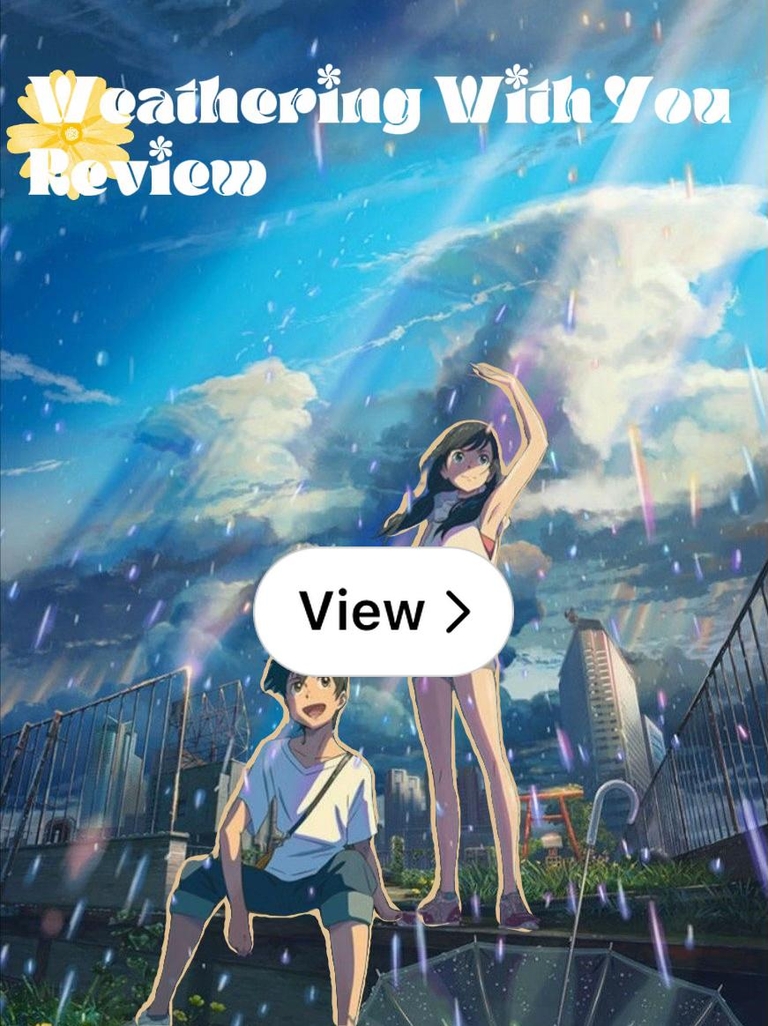
The movie starts with Hodaka, this sixteen-year-old kid who runs away from his island home because he feels "stuffy," which is the kind of vague motivation that drives anime fans crazy but feels weirdly true to being sixteen. He hits Tokyo in the middle of this bizarre weather event where it's just raining constantly, not normal rain but this heavy, oppressive, endless downpour that makes the city feel like it's slowly dissolving. He almost dies on the ferry over, gets rescued by this sketchy guy named Keisuke who runs a occult magazine, and ends up living in this derelict building with a gun he found in the trash because that's a totally normal thing that happens in Shinkai movies apparently. Then he meets Hina, this girl working at a McDonald's who looks like she's about to vanish into thin air, and she has this ability to pray the rain away and make the sun come out through the clouds.
What Actually Happens in This Movie
So Hina's the "sunshine girl," this mythical figure who shows up once in a generation and can control the weather through prayer. She got the power from passing through this weird shrine gate on the roof of a derelict building, and every time she uses it, she gets a little more transparent until eventually she'll disappear completely and become part of the sky or something. Hodaka decides they should monetize this because they're broke teenagers in Tokyo, so they start this business where people pay them to make it sunny for weddings and festivals and whatever. It's basically a startup but for weather, and there's this whole montage set to RADWIMPS where they're running around Tokyo making the sun come out while the money rolls in.
But then the other shoe drops. The rain keeps getting worse, and Hina's getting weaker, and eventually she realizes the only way to stop the endless storms is to sacrifice herself completely and let the rain fall forever, which would save Tokyo but erase her from existence. She does it. She disappears. Hodaka loses his mind. He grabs the gun he found earlier and runs from the police because he's a runaway minor with a weapon now, and he finds his way back to that shrine gate and shoots it open or prays through it or something equally surreal, and he finds Hina in this sky world above the clouds and rescues her. The rain comes back. Three years later, Tokyo is half underwater but Hodaka and Hina are together and apparently fine with having destroyed the city for their happiness.
Hodaka and Hina Are Kind of Annoying Protagonists
Here's where people get mad. Hodaka has basically no backstory. We know he had a rough home life, but the movie never shows us what exactly was so bad that he had to run away to Tokyo with no money and no plan. He just felt "stuffy." That's it. That's his whole motivation. And then he finds this gun in the trash, which is this huge Chekhov's gun moment that the movie kind of forgets about until the climax where he uses it to threaten people so he can save Hina. It's messy. Some critics called the film morally ambiguous specifically because of this gun stuff and the way he just kind of waves it around like it's no big deal for a teenager to have a firearm in Tokyo.
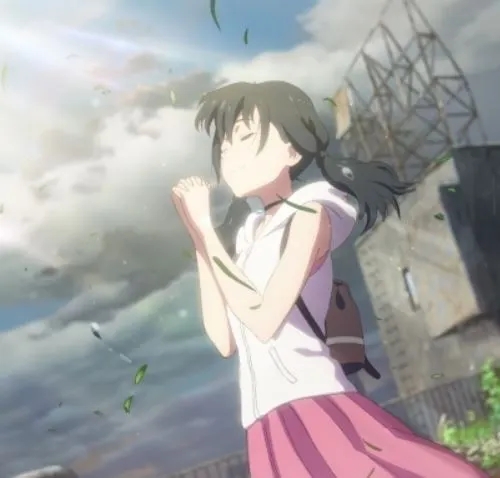
Hina isn't much better. Her mom died, which is why she's working fake jobs to support her little brother Nagi, but the movie treats her mother's death like a plot device to explain why she has weather powers instead of actually exploring her grief. She gets these powers from praying at a shrine for her mom's health, her mom dies anyway, and now she can make the sun come out. That's the whole character arc until she starts fading away. The relationship between them happens fast, too fast maybe, and you're supposed to believe that Hodaka would literally flood a city of fourteen million people to save this girl he's known for like a month. But that's also kind of the point. Teenage love is stupid and selfish and doesn't care about the greater good, and Shinkai seems weirdly committed to showing that without judging it.
The Ending That Made Everyone Mad
The ending is where weathering with you anime film really separates itself from Your Name. In Your Name, the characters save the town and get together and it's this perfect cathartic release. In Weathering With You, Hodaka chooses Hina over Tokyo, and the movie doesn't really punish him for it. Three years later, we see him visiting a flooded Tokyo where people have just adapted to living in a partially submerged city, boats in the streets, new infrastructure, life goes on. Keisuke, who was trying to stop Hodaka from saving Hina earlier, basically tells him it wasn't his fault, that the world was already crazy, that they were just kids. The movie lets them off the hook completely.
This drives people insane because it feels like the movie is saying personal happiness matters more than collective responsibility, that it's okay to let the world burn if you get to keep your girlfriend. But other readings of the film suggest Shinkai is actually criticizing the older generation for expecting the youth to fix climate problems they created. Hina is expected to sacrifice herself for a world that made her mother die and forced her to raise her brother alone while working sketchy jobs. Why should she save them? Why shouldn't Hodaka choose her over a society that was going to arrest him and send him home? The flooded Tokyo in the epilogue looks strangely beautiful, peaceful even, like the city adapted and survived despite the rain. Maybe Shinkai is saying we'll survive climate change, but we shouldn't expect children to die for our mistakes.
Shinkai's Rain Obsession Gets Out of Control
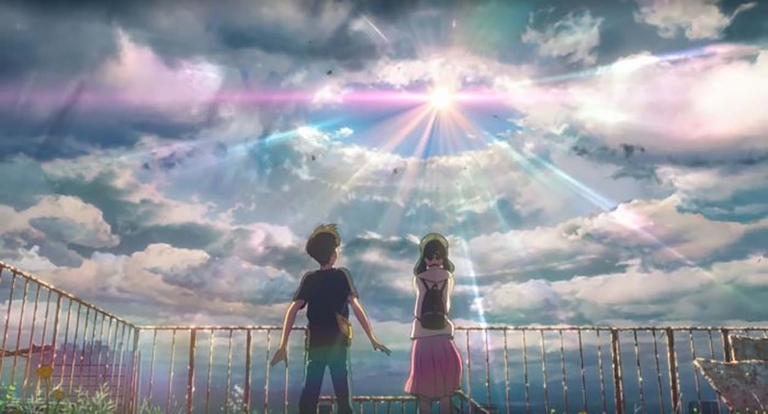
Visually, this movie is ridiculous. Shinkai has always been obsessed with light and sky and water, going back to 5 Centimeters Per Second and The Garden of Words, but Weathering With You takes it to this almost absurd level of detail. The rain doesn't just look like animated rain. It looks like someone filmed actual rain and then painted over it frame by frame. You can see individual droplets hitting puddles and creating these perfect concentric ripples. When sunlight breaks through the clouds, it's not just a generic beam of light, it's these god rays that cut through the humidity and scatter across wet pavement in ways that make you forget you're looking at drawings.
Apparently the animation team used a mix of hand-drawn and CGI techniques to get the rain looking that hyper-realistic, and you can tell they spent most of the budget on weather effects. The scenes where Hina prays and the clouds part are coordinated perfectly with the RADWIMPS soundtrack, these moments where the music swells and the animation just explodes with color and light. It's manipulative as hell but it works. You'll be sitting there knowing the plot makes no sense and the characters are making terrible choices but then the sun comes out over a shrine while the guitar kicks in and suddenly you're crying. That's the Shinkai special.
It Looks Like Your Name But Feels Completely Different
Everyone compares this to Your Name because it's Shinkai's next big movie and it has the same basic structure: boy meets girl, supernatural separation, desperate rescue, happy ending. But the vibes are totally different. Your Name was about connection across impossible distances, about fate bringing people together. Weathering With You is about how love is selfish and destructive. The cameos from Your Name characters in this film just make the contrast more obvious. Taki and Mitsuha show up in the background, and you remember how their story was about saving a town through sacrifice and understanding, while Hodaka and Hina are actively choosing not to sacrifice for the town.
The pacing is messier too. Your Name was tight, every scene mattered, the timeline twists were carefully constructed. Weathering With You has this weird middle section where they're just running a weather business and there's a fat cat and a kid who plays Fortnite, and it feels like Shinkai just wanted to hang out with these characters in sunny montages for a while before getting back to the plot. Then the ending is rushed, the rescue happens too fast, the three-year time skip feels like a cop-out. But again, that's what makes it fascinating. Some reviews point out that it feels like a "clone" of Your Name in structure but totally different in emotional intent, and that dissonance is what makes people uncomfortable.
The Climate Change Question Is Weirdly Background
You'd think a movie about endless rain and flooded cities would be heavy-handed environmental propaganda, but it's really not. The climate change stuff is just... there. The rain starts before the movie does and continues after it ends. People adapt. The movie draws from real climate data about increased precipitation, but Shinkai isn't preaching about carbon footprints or pollution. He's using extreme weather as a backdrop for a fairy tale about a girl who talks to the sky.
That's actually kind of refreshing. Most climate fiction feels obligated to lecture you, but Weathering With You just treats the weather as this cosmic force that doesn't care about human morality. The rain isn't evil. Hina's powers aren't good. They're just natural phenomena that happen to intersect with these kids' lives. The film suggests that we've already messed up the climate so bad that expecting individual sacrifice to fix it is foolish, which is a pretty dark take for a romance movie. But it also suggests we'll survive it, that cities can flood and people can build boats and life goes on. It's not hopeful or hopeless. It's just resigned.
Why the Messy Parts Make It Better
The gun never gets explained. The police chase is absurd. Keisuke's relationship with his dead wife's family is barely sketched out. Nagi is cute but has no arc. Hina's mom is just a plot device. The shrine mythology is vague and full of holes. And yet, the movie works because it commits to its emotional truth even when the plot falls apart. Hodaka doesn't care that he's dooming Tokyo. He cares that Hina is gone and he wants her back. That's it. That's the whole movie.
When you think about it, most teenagers would make the same choice. Most people would choose the person they love over abstract concepts like "the greater good." Shinkai had the guts to make a blockbuster anime that admits most of us are selfish cowards who would let the world burn for love, and then he made that admission look like the most beautiful, sun-drenched romance possible. The contradiction is the point. The film shows Shinkai at his most divisive because he refuses to give easy answers.
Weathering With You anime film is imperfect, morally questionable, visually overwhelming, and emotionally manipulative. It's also unforgettable. You don't have to like Hodaka and Hina. You don't have to agree with their choice. But you have to admit that in a medium full of stories about noble heroes saving the world, there's something fascinating about a movie where the heroes choose each other instead, and the world just has to deal with the rain.